Solar Installer Checklist
Use this page to get ready for your first chat with an installer. It covers what to gather, what to ask, and how to compare quotes without getting lost in the details.
Bring confidence to the quote call
A good installer will guide you, but you will get better answers if you show up with a few basics and a clear goal. Start with the calculator and save the results. Then use the checklist below to steer the conversation.
Tip: after running the calculator, take a screenshot of your results so you can share them during the call.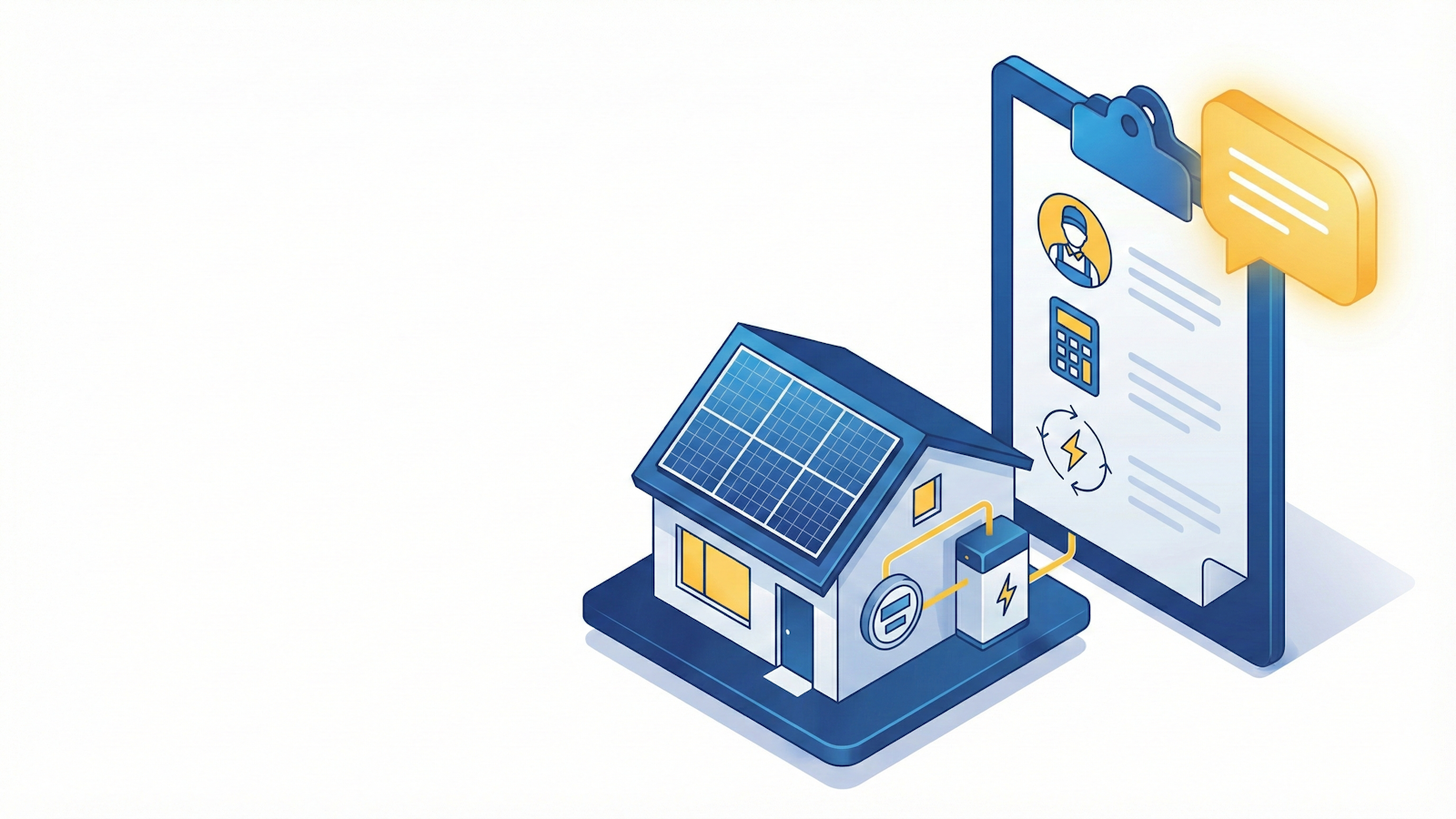
1) Get clear on your goal
Installers can design very different systems depending on what you want. Pick your main goal and tell the installer early.
- Lower electricity bills. You mainly want good value and strong yearly production.
- Backup power during outages. You care about what stays running when the grid is down.
- Both. Tell them which matters more so they can size the system properly.
Also think about whether you want room to expand later, like adding an EV charger, heat pump, or air conditioning.

2) Use the calculator first
Before you call an installer, run your numbers on the calculator and save the results. A screenshot works fine.
Bring these items from the calculator:
- Your estimated daily electricity use.
- Your rough system size estimate, like panel count or kW.
- If you included a battery, the battery size estimate and the backup nights you chose.
- Any notes you made about big loads like EV charging, cooking, or heating.

3) Information to have at hand
If you have these ready, the installer can give you a more accurate design and a cleaner quote.
Electricity and usage
- One full year of electricity bills if you can. If not, bring the last 3 months and mention if winter or summer is higher.
- Your tariff type if you know it, like day night rates or time-of-use pricing.
- Any planned changes in usage, like an EV, heat pump, air conditioning, or more days working from home.
Your home
- Your address and a few roof photos taken in daylight.
- The age and type of roof, and whether you plan to replace it in the next 5 to 10 years.
- Photos of your electrical meter area and your main electrical panel.
Constraints
- Any HOA, landlord, or building restrictions.
- If you care about looks, tell them which roof sides are acceptable for panels.

4) Questions to ask the installer
You do not need to ask everything. Pick the questions that match your goal and use them to keep the quote detailed and comparable.
A. About the installer
- Are you licensed and insured for this work in my area?
- How long have you been installing solar, and how many systems have you installed locally?
- Who does the work. Your own team or subcontractors?
- Who handles permits, utility applications, and inspections?
B. About the design
- How did you size the system for my home?
- Which roof faces are you using, and why?
- How do you account for shade from trees, chimneys, or nearby buildings?
- Can you show the layout drawing, not just a price?
C. Production and savings
- What is my estimated yearly production in kWh?
- What assumptions did you use for direction, tilt, shading, and losses?
- Do you include panel performance decline over time in the estimate?
- If your estimate is wrong, what happens?
D. Equipment and monitoring
- Which panel brand and model are you quoting, and why?
- What inverter setup are you recommending, and why?
- What monitoring app will I get, and what can I see in it?
E. If you want a battery or backup
- Can this system run during an outage?
- Which circuits will be backed up?
- How long will it realistically run my critical loads?
- Does it switch over automatically, or do I need to do something?
F. Warranties and support
- What is the product warranty on panels, inverter, and battery?
- What is the workmanship warranty on the installation?
- If something fails, who do I call and what is your typical response time?

5) Typical decisions you will make
- System size. Smaller costs less but offsets less of your bill. Larger may export more, depending on local rules.
- Panel placement. Best production spots versus the most discreet spots.
- Battery or no battery. Batteries add cost, but they can increase self use and enable backup.
- Backup scope. Essentials only is cheaper than whole-home backup, and often more practical.
- Future proofing. Leaving room for extra panels, EV charging, or a battery later.
If you are unsure, ask the installer to quote two options. One that is focused on value and one that is focused on backup.

6) Common complications
These are common reasons quotes change after a proper site visit.
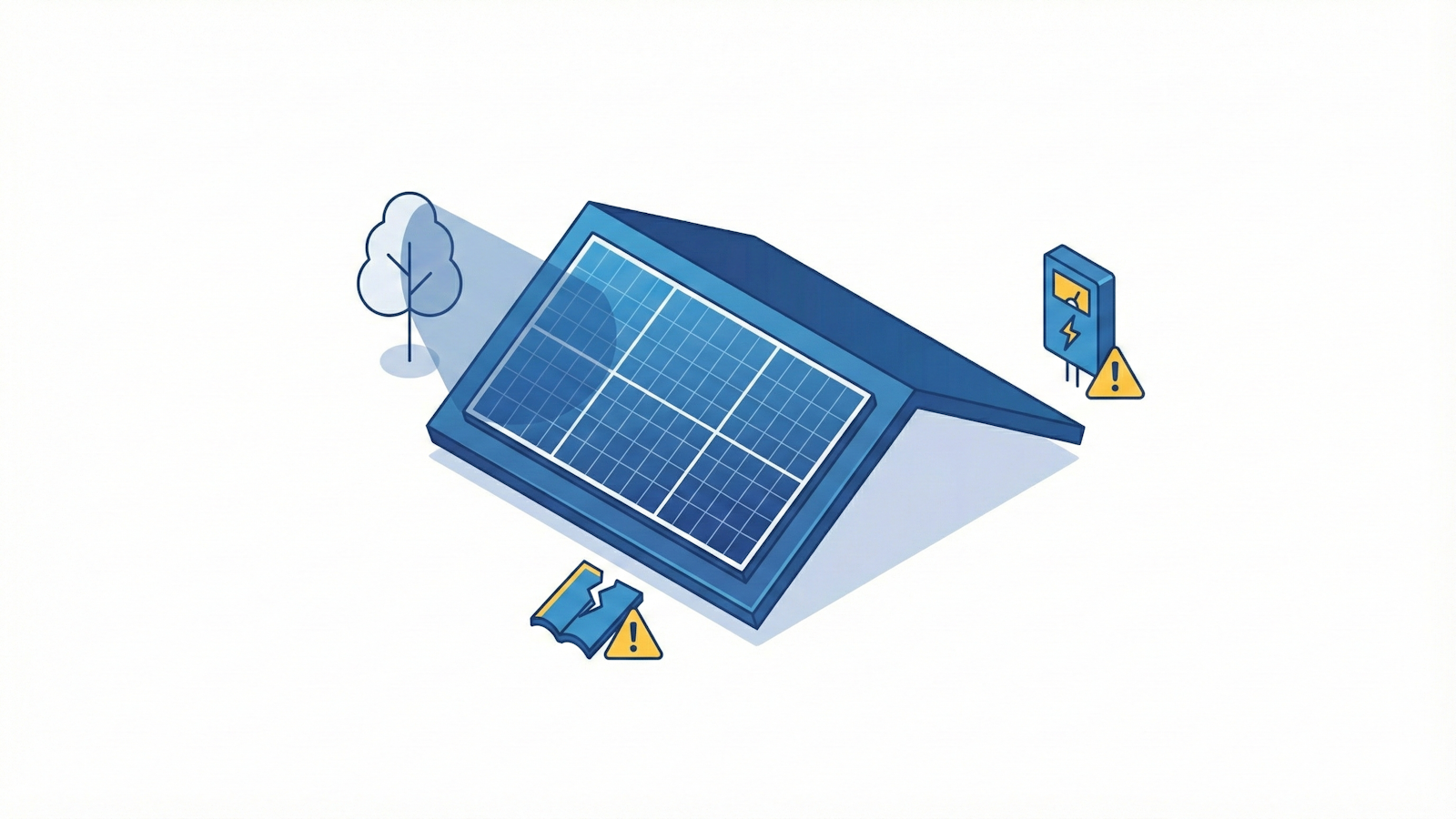
- Roof condition. Repairs or reinforcement may be needed before mounting panels. See the Roof Checklist.
- Shading. Trees that look harmless in winter can block a lot in summer.
- Electrical limits. Older panels or limited breaker space can trigger upgrades.
- Cable routes. A neat cable route might be harder than it looks.
- Permits and approvals. Timelines can vary by area and network operator.
7) How to compare quotes fairly
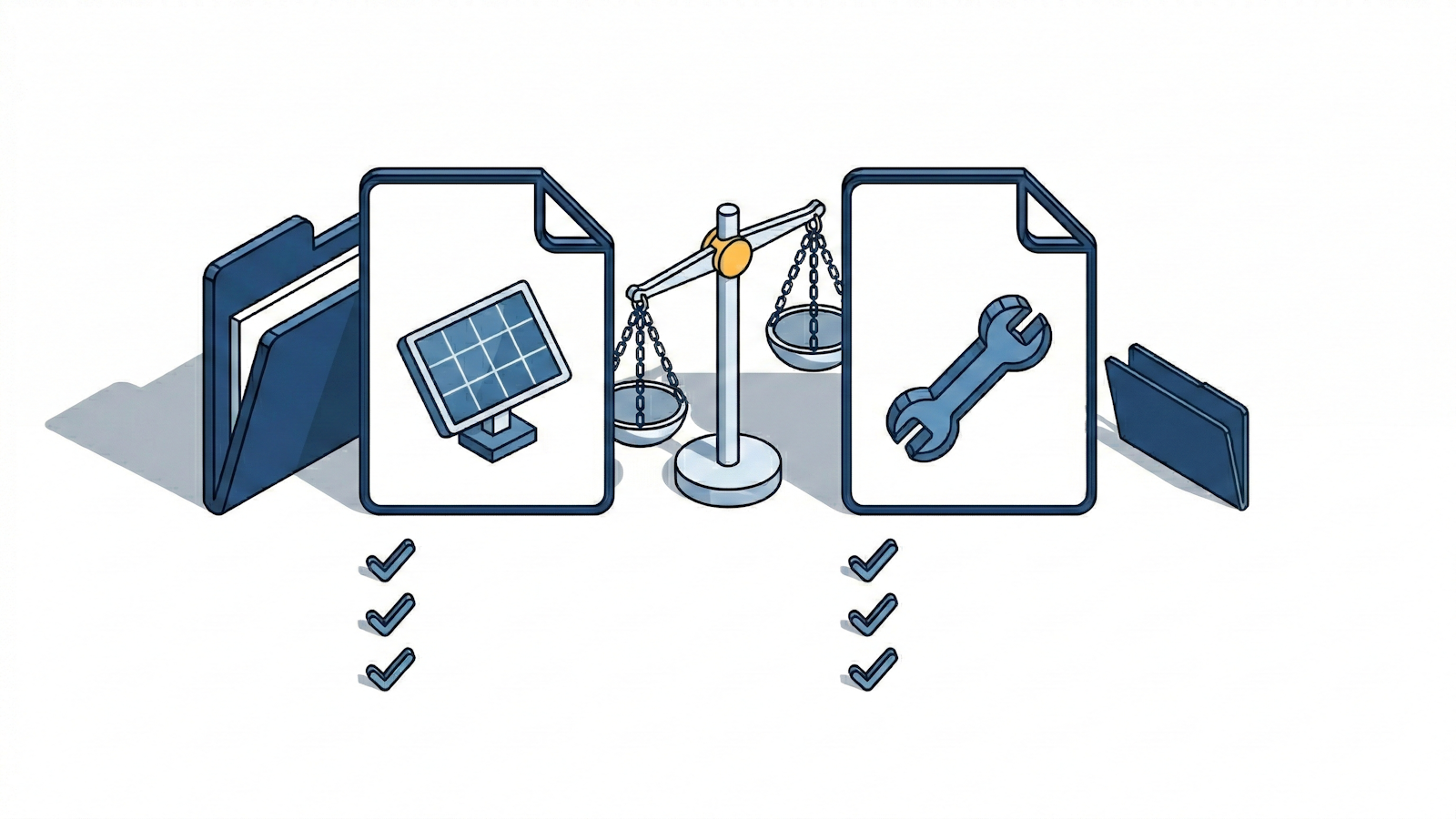
Do not compare quotes by total price alone. Different installers may use different assumptions, so make sure you compare like with like.
Ask each installer for a quote that clearly states:
- System size in kW and expected annual production in kWh.
- Panel and inverter make and model numbers.
- Battery model and usable capacity, if included.
- Workmanship warranty length, plus product warranties.
- What is included in the price, and what could add cost later.
8) Red flags to watch for
- They refuse to share equipment model numbers.
- They will not explain how they estimated production.
- The quote looks cheap but leaves out permits, monitoring, or electrical work.
- They push you to sign before a site visit.
- They avoid warranty questions or cannot explain who handles claims.

9) What to do right after the call
- Ask for the proposal in writing.
- Save drawings, spec sheets, and warranty documents.
- Write down what was promised verbally, especially what is included and any timeline expectations.
If you talk to multiple installers, keep your calculator results and assumptions the same. It makes quote comparisons much easier.