Single-phase vs Three-phase home electricity supply
If you’re planning solar, an EV charger, or a heat pump, it helps to know how your home is supplied. Your “phase” mostly affects how big an inverter you can connect and how much you’re allowed to export.
What “single-phase” and “three-phase” mean
Single-phase (most common)
Think of it as one main “live” supply feeding your home. Many houses have a single phase plus a neutral (and earth). In North America, most homes are still single-phase, even though they have 120/240V split‑phase.
Three-phase (for higher capacity)
This is like having three “live” supplies that share the load. It’s common in commercial buildings, and also in some homes where higher power is needed (or where it’s standard in the area).
Don’t guess based on your country alone. The most reliable clues are on your meter and your main switch.
Why phase matters for a home solar setup
For solar, “phase” matters less for your panels and more for the inverter and grid connection rules. The three main reasons are:
- Export limits: many grids limit how much power you can feed into the street network per phase.
- Inverter choice: larger systems are often required to use a three‑phase inverter.
- Voltage stability: pushing a lot of power into a single phase can raise local voltage, which can make inverters throttle down or switch off for safety.
Choosing the right inverter
Solar panels make DC electricity, but your home uses AC electricity. The inverter is the box that does the conversion, and it has to match your connection. Small systems often use a single-phase inverter. Larger systems often need a three-phase inverter so the export is shared across phases.
A quick myth-buster about “net metering”
People sometimes worry that a single-phase inverter won’t “offset” usage on other phases. In many areas with modern smart meters, the meter adds up import and export across all phases, so the net result is what matters. If you want to be sure for your location, ask your utility how your meter calculates net energy.
Good news: if you’re still early in planning, you can run the calculator even if you don’t know your phase yet. Phase mostly becomes important once you start discussing inverter size and grid approval.
Maximum System Size (Feed-in Limits)
The biggest practical difference is often the maximum inverter output you’re allowed to connect. Exact rules vary by country and even by network operator, but a simple rule of thumb in many 230V regions is:
- Single phase: around 3.7 kW at 16A (roughly 9–11 modern panels, depending on panel size and local rules).
- Three phase: around 11 kW if spread across three phases at 16A each (often enough for 25+ panels, depending on panel size and limits).
These are only examples to build intuition. Your allowed export may be higher or lower. Always check your utility / installer for the limit that applies to your address.
Want a quick estimate of how many panels you might need before you worry about export limits?
Open the Solar CalculatorHow to check your home’s phase (safely)
Most homeowners can figure this out in a few minutes without touching wiring. Start with the easiest clues:
- Look at the meter label or screen: you may see markings like 1φ / 1P (single-phase) or 3φ / 3P (three-phase).
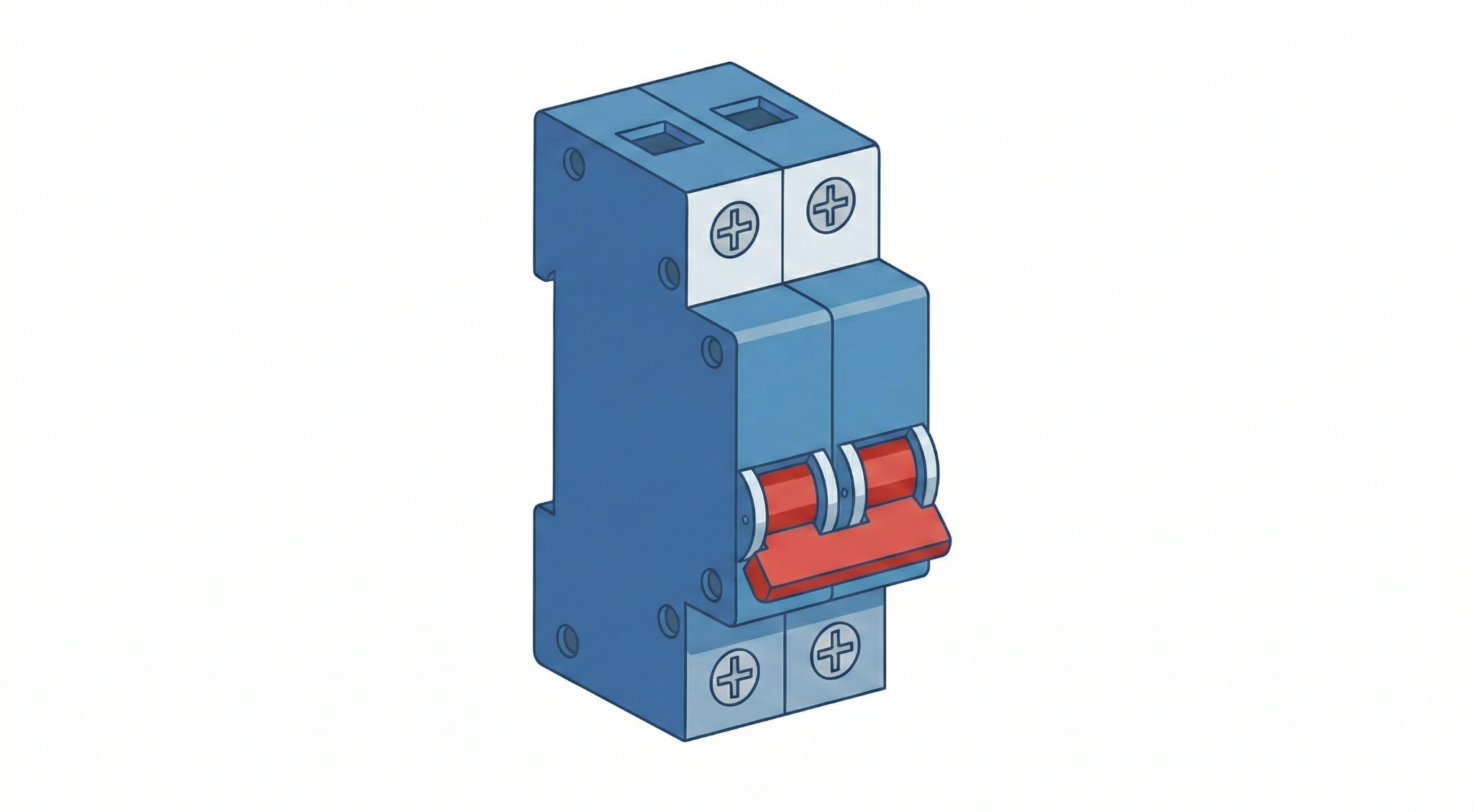
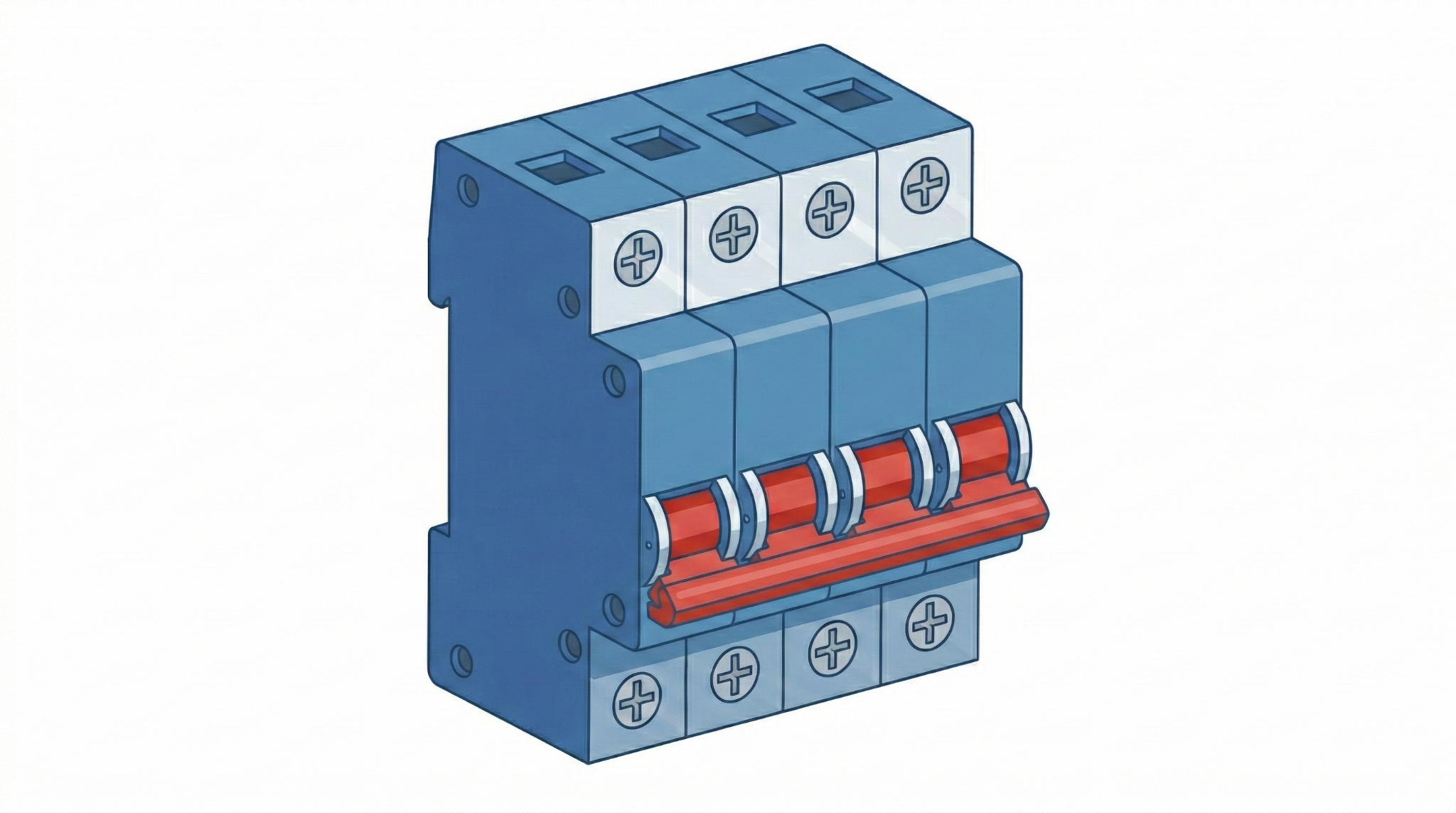
- Check the main switch in your distribution board: a 2‑pole main switch often suggests single-phase; a 4‑pole main switch often suggests three-phase.
- Check any paperwork: utility letters, connection contracts, older inspection reports, or solar/EV paperwork sometimes state the connection type.
Safety note: don’t open sealed utility equipment, remove covers, or touch anything that looks damaged. If you’re unsure, stop and call a professional.
Use this wizard to determine whether your home is Single-phase or Three-Phase
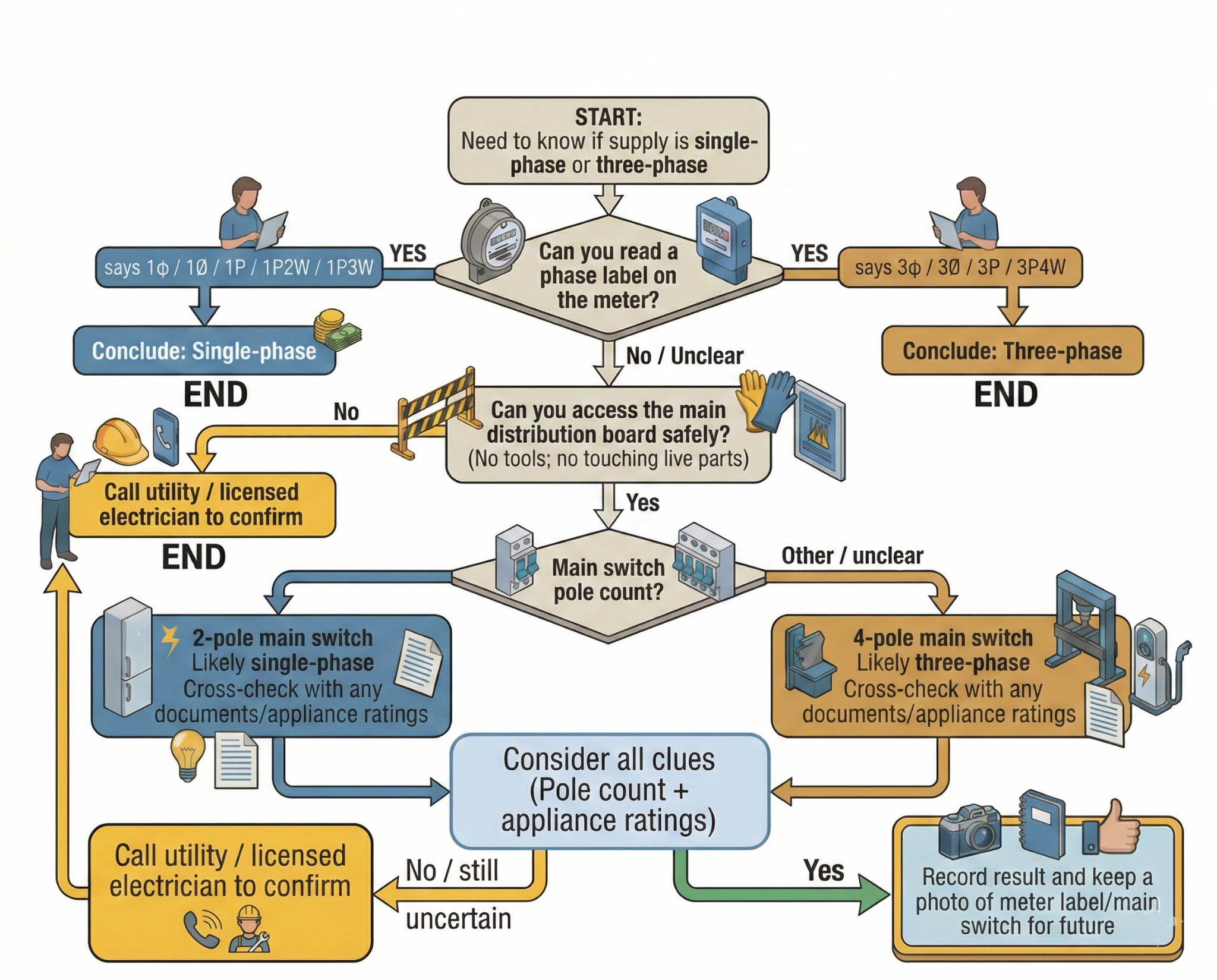
Quick phase check (no tools)
Answer a few questions using only safe, visual clues. If anything is unclear, the wizard will point you to the safest next step.
Safety reminder: don’t open sealed utility equipment, remove covers, or touch wiring. If you can’t confirm safely, contact your utility or a licensed electrician.
2‑pole vs 4‑pole main switch (what it looks like)
These pictures are only for recognition. Don’t remove covers or touch wiring — if you can’t confirm safely, stop and ask a licensed electrician.
When to contact your utility or a licensed electrician
Stop your own investigation and get help if any of the below apply:
- You can’t find clear labels, and checking further would mean removing covers or breaking seals.
- You’re planning a larger solar system, an EV charger, a heat pump, or workshop equipment and need to confirm both phase and service capacity.
- You notice warning signs (burning smell, buzzing, heat marks, frequent trips, or anything that looks damaged).
Choosing the right inverter
Solar panels make DC electricity, but your home uses AC electricity. The inverter is the box that does the conversion, and it has to match your connection. Small systems often use a single-phase inverter. Larger systems often need a three-phase inverter so the export is shared across phases.
A quick myth-buster about “net metering”
People sometimes worry that a single-phase inverter won’t “offset” usage on other phases. In many areas with modern smart meters, the meter adds up import and export across all phases, so the net result is what matters. If you want to be sure for your location, ask your utility how your meter calculates net energy.
When you call, ask: “Is my home supply single-phase or three-phase, and what is my main fuse / service size (amps)?”
FAQ
Does phase change how many panels I can put on my roof?
Panels can be installed on any roof. Phase mostly affects the inverter output you’re allowed to connect and export. If you want a larger system, three-phase is often the easier path.
Is 120/240V “split-phase” the same as three-phase?
No. Split-phase (common in the US and Canada) is still single-phase. It provides two 120V legs that combine to 240V for larger appliances.
Do I need a three-phase inverter if my home has three-phase power?
Not always. Small systems can sometimes use a single-phase inverter even on a three-phase supply. For larger systems, many utilities require a three-phase inverter (or they limit how much you can export on one phase).
Will I lose financial credit if my solar feeds into one phase but I consume on another?
In many places with modern smart meters, import and export are added up across phases, so you’re not “penalized” for which phase the power is on. If you want to be 100% sure, check your meter’s documentation or ask your utility how netting is calculated.
What’s the fastest way to check my phase?
Look at the meter label first (1φ/1P vs 3φ/3P). If it’s unclear, check the main switch pole count in your distribution board—without removing covers.
Last updated: 2026-03-03.